


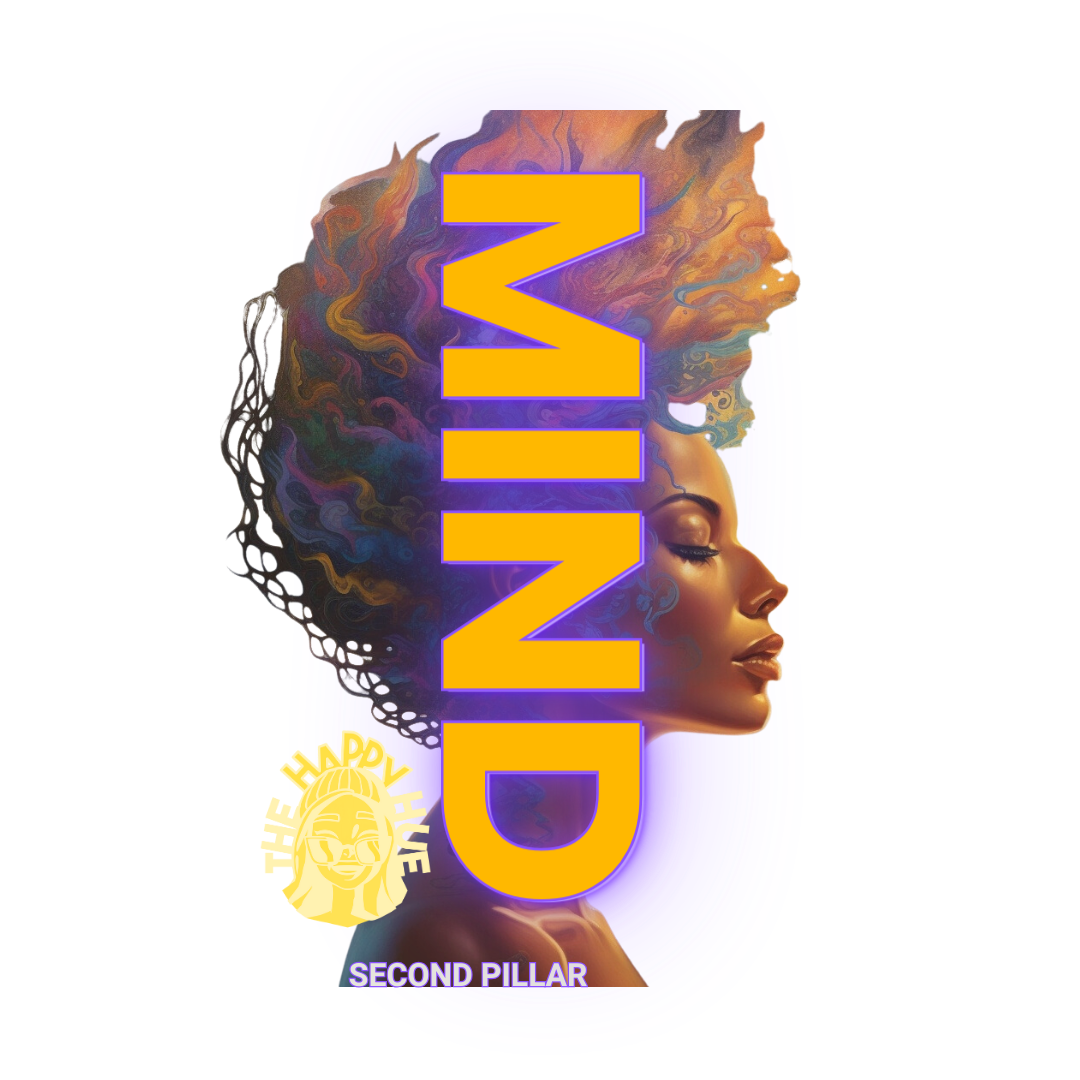
The mind represents the thinking thing in you. While your brain is the physical structure sitting in your skull, your mind is where your thoughts, perceptions, emotions, beliefs, and subjective experiences exist.
While the two terms are sometimes interchangeable, the difference is the brain is an undisputable tangible organ while the mind is an abstract and subjective entity that’s still debated about.
From scientists to philosophers alike, the origins of the mind, especially consciousness and where it sits is a topic that has yet to reach any definitive conclusions.
While it’s hard to imagine a mind without a brain, most intellects agree to disagree, as while most can agree on the mind’s presence no one can prove its origins. Also while you and I can agree that each person possesses a subjective mind, no one can (yet) experience another’s mind— such abilities feel more like science fiction.

One of the most important stages of sleep is what’s known as Rapid Eye Movement or REM sleep because this is the sleep stage where information is processed into long-term memory. In other words, it’s where most of your learning from each day is transformed and integrated into your mind as knowledge. This is why, scientists say it’s best to try to learn right before you go to sleep as the information is fresh for processing once you fall asleep.
REM sleep is also famous because it’s the stage of sleep where dreaming happens. While dreaming, your brain will temporarily paralyse your limbs to ensure you do not act out your dreams because while you’re dreaming your brain activity is more similar to your brain states when you’re awake. With all that activity, it’s no surprise why your eyes are moving rapidly under those eyelids— and hence, how this sleep phase got its name.
On average you are only in REM sleep for a total of 90 minutes throughout a seven to eight hours sleep window. That’s about 25-25% of your total sleep time, as REM reoccurs through about three to five cycles during your total sleep time. It’s in these crucial minutes that what you’ve encountered in your day is processed and retained.

Your mind’s subjectivity translates into your personal preferences. Think about an activity you enjoy that sparks joy, excites you, and one that you can lose yourself in the moment for. Think of the thing that insights playfulness and brings out the child in you.
Whatever it is that coming into your imagination right now, go with that first instinct. The activity you are thinking of is your mind’s chosen activity for mindful rest and recovery.
Plenty of research supports the practice of allowing time for spontaneity, wonder, and playfulness like you once had as a child. The pure act of curious wandering is one of the best types of rest and recovery you can give your mind, it not only helps you to relax. But science proves that it’ll also help your mind become more creative and productive— playful joyful activities are what will rejuvenate your mind.

A foundational method of training the mind is in how you craft your reality through your thoughts. Are you someone who looks at the world as half glass full or half glass empty? Do you uphold a fixed mindset or a growth mindset? Are you more of a pessimist who fears for the worst or are you an optimist who finds the brighter side to life? Do you worry about things that haven’t happened yet or are you hopeful that life working itself out in your favour?
Your perspectives are the conditions you habitualise your mind to— it is one of the most underrated forms of mind training you’re fully in control of. Your mindset is the subjective foundation of how you experience everything else. Every day, at any given moment, you have the opportunity to exercise mind training.
Every time a thought occurs, ask yourself, is this thought helping me or making my life more difficult? Do you notice what’s going well or what’s going wrong? Three people can walk away from the same experience with three different stories because it’s about the narratives in your mind that determine how you experience something— and it’s all down to how you train your mind.

Nourishing your mind is about equipping your mind with the best environment to either thrive or falter. One of the greatest methods of achieving such replenishment is to proactively safeguard how you spend your minutes.
Injecting your mind with doses of positivity, optimism, and hope, even while you might be experiencing a down period in life is one of the best kinds of nourishment that promotes resilience in your mindset to take you further along in any given moment.
Nourishment is about intentional choices on how you replenish your mind. Are you nurturing a supportive environment or are you making things harder for yourself? Are you consuming content that uplifts and supports or content that feels heavy and distracts?
Mindset is about how you nourish yourself daily; it has a compounding effect. If you spend most of your day putting yourself or others down, will your mind feel nourished at the end of the day? What if you spend your day steeped in encouragement and uplifting thoughts, how do you think your mind will feel at the end of the day?

Your mind is a stimulation sponge. Even when it seems you’re doing nothing, your mind is active, it’s what it’s made to do.
With the ease of smartphones and the hyper-stimulation world we live in, an overload of sensory stimulations and information is often the default. The mind, in this era, is much more stimulated, so it’s important to stay vigilant about managing these inputs.
Even while you’re asleep, the mind is stimulated. Whether through changes in brain waves or periods of dreaming, the mind is nowadays running at full throttle.
One of the most underrated methods of stimulation is pure intentionality. What are you spending your time doing and why are you doing the things you’re doing? Intention is a powerful tool to steer you either toward the future you want to create or pull your father away from them.
Given the opportunity to decide, what are you intentionally stimulating your mind with today? Every millisecond matters, because even while you’re asleep your mind, one way or another, conscious or subconscious, is active and stimulated.

What is REM Sleep, Why it’s Important, How Much You Need & How to Increase It | WHOOP
Brain Basics: Understanding Sleep | National Institute of Neurological Disorders and Stroke
Thanks again for reading!
This publication is a solo effort. My ambition is to build this space into a thriving and engaged community of like-minded curious souls. I am grateful for your time each week and thank you for your support.
If you enjoyed reading this, please share it with someone you care about or please subscribe if you aren’t part of this growing community yet.
By the way, if you’re a paying subscriber, the more people you refer that sign-up, the higher the chances you’ll receive a free month on me. So, as the algorithm decides this on my behalf, please make sure to share it with the link below.
NEVER MISS A POST…
Subscribe to receive the latest newsletters each week to celebrate your paths to LIVE BEYOND. Receive weekly updates, direct to your inbox, that aims to equip and empower you towards transformation.
You’ll receive at least one newsletter a week, with some intermittent additional content on other weeks— some of which will only be accessible to paying patrons, so consider subscribing and upgrading to support my efforts.
If you’re interested in more practical tools…
You can access the first edition of The Happy Hue’s method workbook here, along with a library of helpful worksheets and tools to help you dive deeper to equip and empower you towards transformation. Everything is available for purchase here, with more coming soon.
What did you think about today’s posts?
Leave a comment or say hello at hello@thehappyhue.com. I’d love to hear from you.